GARLIC
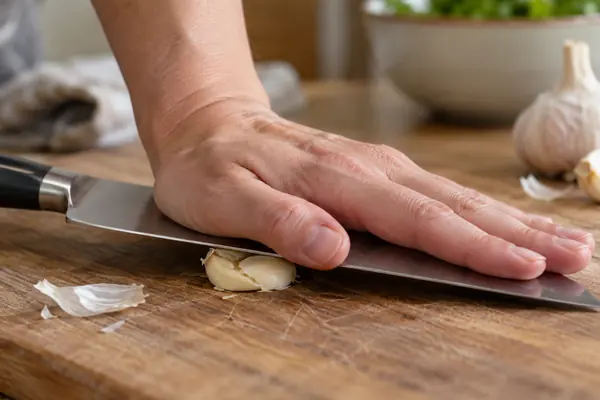
Crushing makes the bite
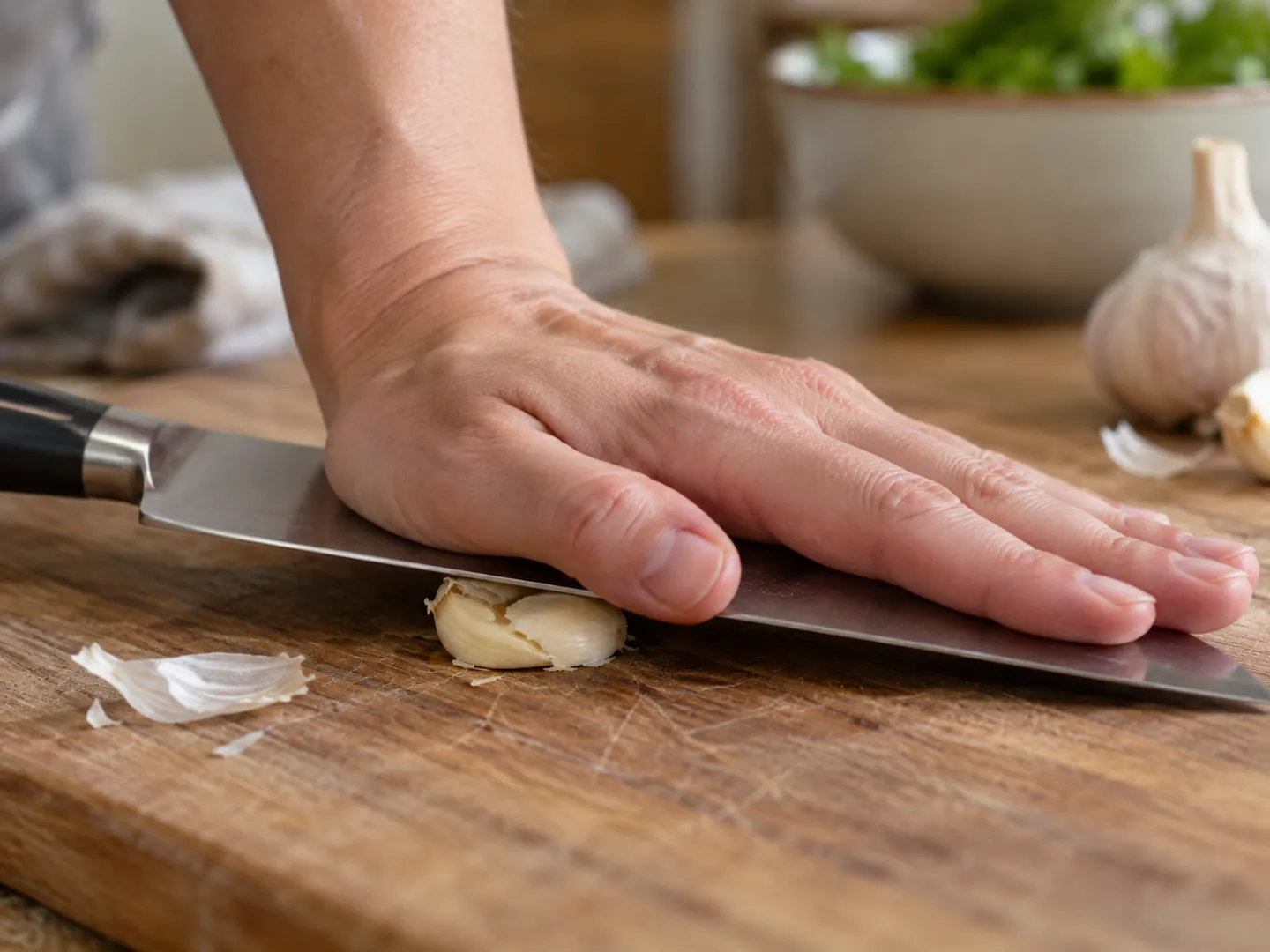
Oregon State University's Linus Pauling Institute says crushing or chopping raw garlic releases the enzyme alliinase, which makes allicin within 10 to 60 seconds.
Check a cut doodlecrush
KITCHEN CHEMISTRY
A whole garlic clove holds no allicin. Crush it and the reaction starts.
Check a cut
10–60 sfor garlic's bite to form
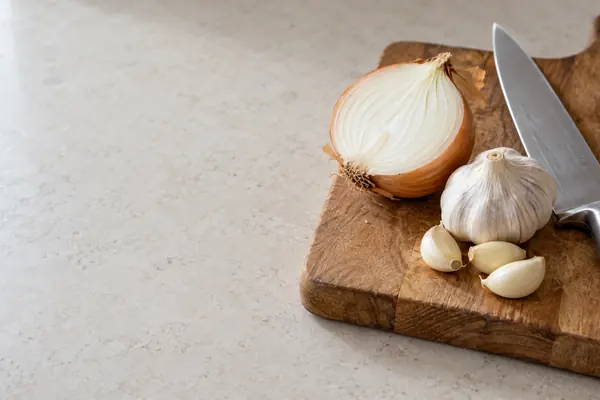
Onions and garlic keep their sharp flavours locked away until their cells are broken. Crushing, chopping or chewing lets an enzyme loose, and within seconds it makes the compounds that sting your eyes or bite your tongue.
At a glance
10–60 seconds
Time for allicin and related compounds to form after crushing
The reaction is very rapid: thiosulfinates have been found to be fully formed within 10 to 60 seconds of crushing garlic.
FORMATION · LINUS PAULING INSTITUTE
2.5 days
Half-life of allicin in crushed garlic at 23°C
Allicin is unstable and breaks down into a family of other sulphur compounds, which is why crushed garlic changes as it sits.
HALF-LIFE · LINUS PAULING INSTITUTE
TWO NUMBERS WORTH KNOWING
One figure for how quickly crushed garlic reacts,
one for how long its key compound lingers.
Garlic cloves yield about 2.5 to 4.5 mg of allicin per gram of fresh weight when crushed, and one fresh clove weighs 2 to 4 g, the Institute says.
A QUICK CUT CHECK
Pick what happens to the onion or garlic. The bar shows roughly how much of the pungent sulphur reaction the step sets off.
Based on the Linus Pauling Institute's garlic article and an Aston University explainer on onions in The Conversation.
THE SHORT ANSWER
Onion and garlic flavours are a defence the plant sets off when damaged.
Three things that follow from it.
GARLIC
Oregon State University's Linus Pauling Institute says crushing or chopping raw garlic releases the enzyme alliinase, which makes allicin within 10 to 60 seconds.
Check a cutONIONS
A cut onion makes a volatile chemical that drifts into your eyes and forms a small amount of irritating acid, an Aston University lecturer explains.
Why garlic doesn'tSTORING
The RHS says dried garlic keeps in a cool, dry place at 5–10°C. Onions, too, prefer somewhere cool, dark and airy rather than the damp fridge.
Kitchen tips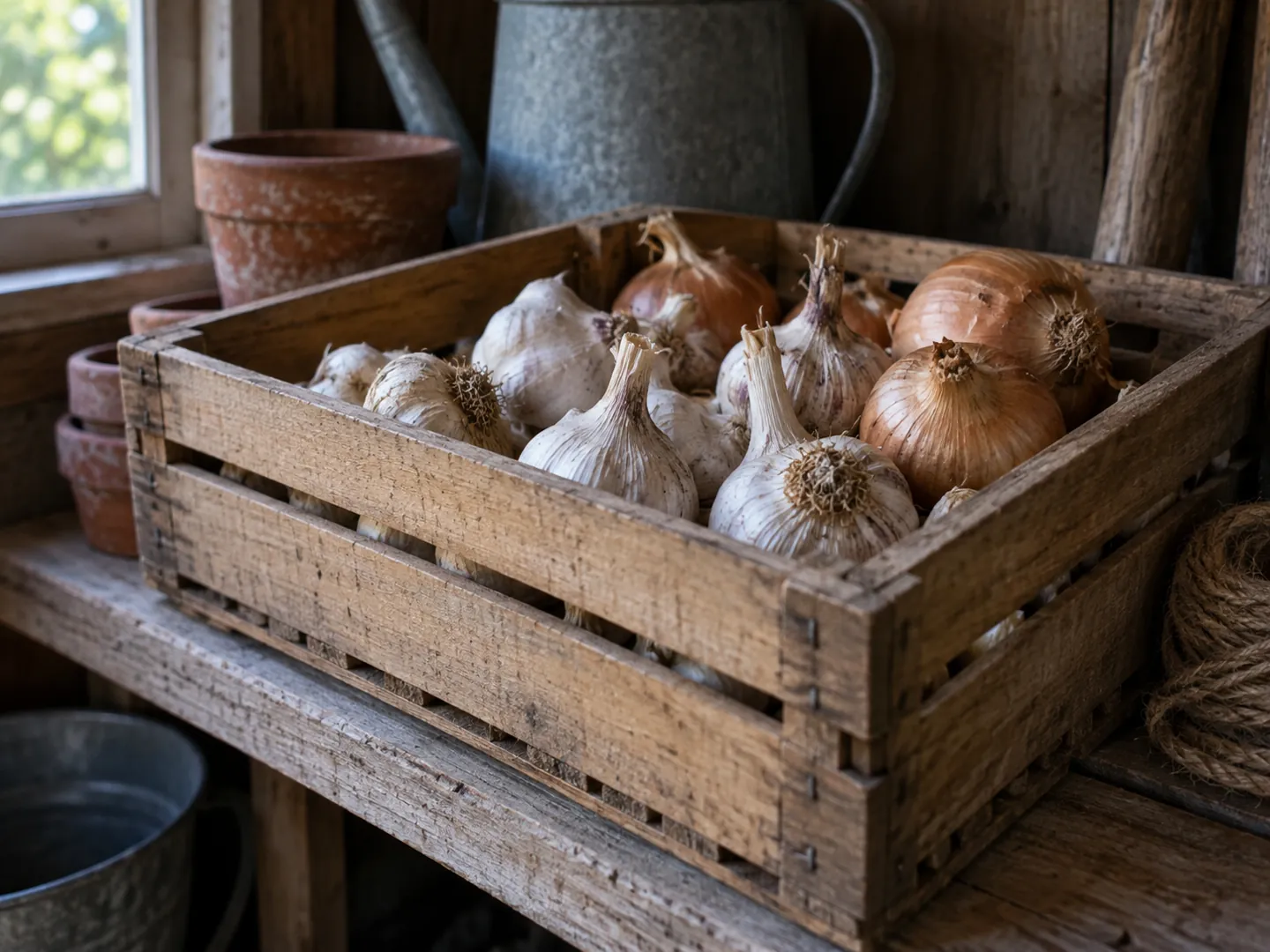
FOUR THINGS TO TRY
You can work with the chemistry rather than against it. These ideas come straight from how the enzymes behave.
A short spell in the fridge or freezer slows the enzymes before you chop. Do not keep onions in the fridge long term.
Drawing the vapour away, with a cooker hood or near running water, keeps less of it from reaching your eyes.
Crushing raw garlic sets off the full reaction; cooking cloves whole before cutting leaves very little allicin formed.
Keep dried garlic at 5–10°C in a dry place, and onions somewhere cool, dark and airy, not damp.
WHY GARLIC DOES NOT MAKE YOU CRY
Onion cells hold a sulphur compound that, once cut, is turned by an enzyme and then by a second one, lachrymatory-factor synthase, into propanethial S-oxide: the gas that stings. That second enzyme was described in Nature in 2002.
Garlic holds a slightly different compound, alliin, which does not break down into the eye-stinging gas. Instead it becomes allicin, the source of raw garlic's sharp bite.
Questions
There is debate. One plausible explanation is the amount of sulphur the onion absorbed from the soil. Sweeter onions tend to have fewer of the sulphur compounds that make the tear-causing gas.
The Aston University explainer says the amount of acid formed in the eye is so small that its effect is only irritating, not harmful.
Both break cells and release alliinase, so both start the reaction that makes allicin. An intact clove contains none, which is why the bite only appears once garlic is cut.
Allicin breaks down into volatile sulphur compounds. The Linus Pauling Institute notes that some of their products, such as allyl methyl sulfide, have been detected in human breath after eating garlic.
The RHS says hardneck varieties store well for four to six months, and softneck varieties for longer, potentially up to a year, once dried and kept cool.
Sources
ABOUT THIS NAME
doodlecrush.com is part of the DoodleSale portfolio. It isn't in an auction right now, but you can ask about leasing it.